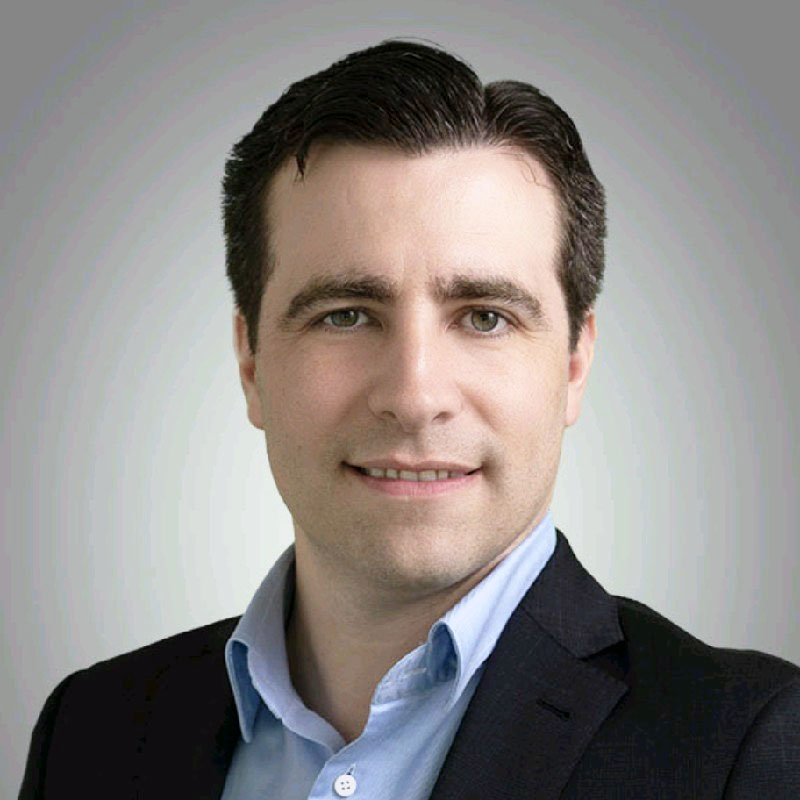
David Nash, MBA, CFP® works with individuals and families across a wide range of financial situations: retirees managing income and required distributions, families navigating estates and inherited assets, and tech professionals working through equity compensation and tax planning. His focus is the decisions that move the needle – tax timing, trust and estate mechanics, and the planning work that quietly compounds over years.
Before joining Parkwoods, David built his career across multiple corners of the financial industry. He worked as an investment banker at Barclays and later as a Regional Director at Dimensional Fund Advisors, where he helped advisors translate academic research into practical investment strategies. He went on to found his own RIA, Tend Wealth, before merging the practice into Parkwoods. He earned his MBA at UCLA Anderson and lives in Los Angeles with his wife and two young kids.
Below, David shares how he works with clients, the misconceptions he sees most often, and why Parkwoods is the right home for the work he does.
How do you help clients at Parkwoods?
I help clients make the financial decisions that actually matter. That looks different for everyone. For someone approaching retirement, it’s sequencing withdrawals, timing Social Security, and keeping required distributions from wrecking the tax picture. For someone settling an estate, it’s stepped-up basis, trust accounting, and getting money to beneficiaries cleanly. For a tech employee, it’s equity compensation, concentration risk, and the tax and retirement planning around them.
The common thread is that most clients arrive with a stack of decisions they’ve been postponing because nobody helped them weigh the trade-offs. My job is to make those trade-offs clear so they can act with confidence.
What should clients expect when they work with you?
Direct answers, in plain English, with the math behind them. I’ll tell you what I think and why, and I’ll show you the trade-offs so you can decide with your eyes open.
You should also expect planning that stays ahead of the calendar that drives your wealth: Roth conversion windows, estimated payments, vesting and exercise dates, RMDs, gifting deadlines. Most of the value in this work is timing, and timing only happens when someone is paying attention before the deadline.
A recent improvement you made that helps clients.
The biggest change is that I no longer work through hard cases alone. When I ran my own firm, it was just me, and complex planning often lives in the gray areas where a second or third informed opinion genuinely changes the answer. At Parkwoods I have a deep bench of advisors and in-house tax experts I can pull into a case, so a thorny question about trust distributions, a Roth conversion strategy, or the AMT exposure on an ISO exercise gets pressure-tested by several experienced people before it reaches the client.
Clients feel that as better answers and fewer blind spots. The hardest decisions are usually the ones where the textbook answer and the right answer aren’t the same, and having a brain trust to work through them means clients get a whole firm’s experience, not just mine.
One misconception you often clarify.
That an advisor’s main job is picking investments. The investment piece matters, and we take it seriously, but it’s the most commoditized part of the work and the least likely to determine whether a plan succeeds.
The decisions that actually move the needle are the ones a portfolio can’t make for you: when to convert to Roth, when to take Social Security, how to title an inherited account, when to exercise an ISO, how to wind down a trust. Those compound for decades, and most of them only come around once. Getting them right is where a good advisor earns their fee.
Why Parkwoods fits how you like to serve clients.
Parkwoods built a firm around the idea that planning comes first and investing supports the plan. That’s exactly how I work. The clients I serve have complicated tax situations, time-sensitive decisions, and lives that don’t fit neatly into a model, and they need an advisor thinking about all of it, not just the portfolio.
It’s also genuinely a culture that puts clients first. It’s the right home for the practice I want to build, and a firm I recommend to my own family.
What’s your favorite question to get from a client – and why?
Almost every question a client asks is really one question underneath: “Am I going to be okay?” The specifics change, but that’s the worry driving most of them.
I love it because it’s the question a real financial plan is built to answer. We design plans expecting that life and the markets won’t cooperate, so when something rattles a client, we don’t have to guess. We pull up the plan, update the numbers, and look. Usually the answer is yes, you’re still on track, and the anxiety drops because it’s now grounded in something real instead of the fear of not knowing. And when the answer is “not yet,” we can see exactly what to adjust. Either way, the client leaves knowing where they actually stand.
How do you approach decisions when markets get noisy?
The honest answer is that I try not to make decisions when markets are noisy. The decisions get made when things are calm – when we build the plan, stress-test it, and agree on what we’ll do across a range of outcomes, good and bad. So when the market gets scary, there usually isn’t a new decision to make. There’s a plan to follow.
It helps that I’ve studied markets long enough that very little surprises me anymore. I can’t tell you what they’ll do next – nobody can – but I’ve seen enough cycles to know that fear and volatility are features of investing, not signs that something has broken. I don’t lose sleep over market drops, and that calm tends to be contagious. A big part of my job in a downturn is simply being the person in the room who isn’t panicking, because we already planned for this.
What’s a fun fact (that’s actually fun)?
I’m a huge Formula 1 fan. I watch every grand prix, but what hooks me is the technology: the engineering arms race, the aerodynamics, the strategy calls that win or lose a race. All that layers on top of the extremely skilled drivers behind the wheels. Most of what decides the outcome is invisible to people watching the cars go around. I could talk about it for longer than anyone wants me to.
If you’re navigating equity compensation, an estate, or retirement income decisions, I’d be glad to talk. Schedule a quick conversation to get started.