In many households, one spouse tends to carry most of the financial knowledge. Not by design – it just develops over time. And for years, it works fine. Until one day it might not.
If something changed tomorrow – an unexpected illness, an accident, the loss of a spouse – the surviving partner would face a difficult emotional moment at exactly the same time they were being asked to make financial decisions. The question isn’t whether they could eventually figure it out. It’s how much harder it would need to be.
Most couples who sit with this question find one of two things: either they’re more organized than they realized, or there are a few (or more than a few) gaps they’d always assumed would sort themselves out.
Either way, it’s worth knowing where you stand.
The Plan Is Solid. The Shared Understanding May Not Be.
One spouse tends to live inside the plan. The other lives alongside it. The plan itself is solid – the shared understanding may not be.
This isn’t a criticism of either spouse. Most couples have the important things in place. There’s a will. There are investment accounts. There’s a general sense that resources are sufficient. These are meaningful things, and they reflect years of responsible planning.
But a plan is built through a process – conversations with an advisor, decisions made over time, a framework for how everything fits together. The spouse who has been part of that process understands not just what was decided, but why. The other spouse may know the plan exists and trust that it’s solid, without having internalized the same depth of context.
When circumstances change, that context is what matters most.
What Stepping In Actually Requires
If your spouse had to step in, what would they actually need to know? It tends to fall into a few practical areas:
Accounts and assets. Not just that accounts exist, but which institution accounts are at, how they’re generally used, and how to access them. In a world where most records are digital, access tends to matter more than familiarity.
How income flows. In retirement especially, income comes from multiple sources – Social Security, required distributions, investment withdrawals, perhaps a pension or rental income. Would your spouse know where income comes from, how much to expect, and what would change if circumstances shifted?
Key documents. Where is the will? The trust, if you have one? Insurance policies, healthcare directives, account beneficiary designations? These don’t need to be memorized, but they do need to be findable.
Who to call. An advisor, an attorney, a CPA – the people who know your situation and can help navigate next steps. Having a short list of trusted contacts, with some context for who does what, is one of the most practical things a family can have in place.
Decisions that are already made. How the investment strategy is set up and why. What level of spending feels right. How involved the children should be, if at all. A good financial plan documents many of these explicitly – but not all of them.
Knowing which questions the plan answers, and which still live only in conversation, is worth understanding now. (If your estate documents haven’t been reviewed recently, our guide on how often to update your estate plan is a useful starting point.)
None of this is complicated. But it doesn’t organize itself.
The Decisions That Live Only in Conversation
Beyond the logistics, there’s a subtler layer worth thinking about.
A well-constructed financial plan makes many judgment calls explicit – how much risk is appropriate, what a sustainable spending rate looks like, how assets are structured across accounts. That’s part of what good planning does: it takes decisions that would otherwise live in someone’s head and puts them somewhere more durable.
But not everything makes it into the plan. Some decisions are arrived at gradually, through years of conversation and shared experience. How much financial help to give the kids, and when. How to respond if the market drops significantly. What trade-offs between spending now and leaving something later feel right to both spouses.
These aren’t questions with a single correct answer – and they may not be written down anywhere, because they’ve never needed to be. If one spouse is suddenly making decisions alone, they may not know which questions the plan has settled and which haven’t been fully resolved.
A short conversation, or even a few notes, can close that gap meaningfully.
An Act of Care, Not Morbid Preparation
It’s worth naming directly: this kind of exercise doesn’t feel good to think about. Most couples don’t avoid it out of carelessness. They avoid it because it requires imagining something they’d rather not.
But the couples who work through it tend to describe a different feeling afterward – not relief from fear, exactly, but a steadiness and comfort. The knowledge that they’ve done something thoughtful for each other. That if something changed, the surviving spouse wouldn’t face confusion on top of grief.
Protecting your spouse financially isn’t primarily about investment strategy or legal documents. It’s about whether the person you’ve built a life with would be able to move forward with clarity. That’s a planning question, but it’s also a deeply personal one.
The good news is that for most organized couples, the gaps are smaller than they expect. A little attention now tends to go a long way.
A Starting Point
If this article surfaced a question you’ve been meaning to come back to, that’s worth paying attention to.
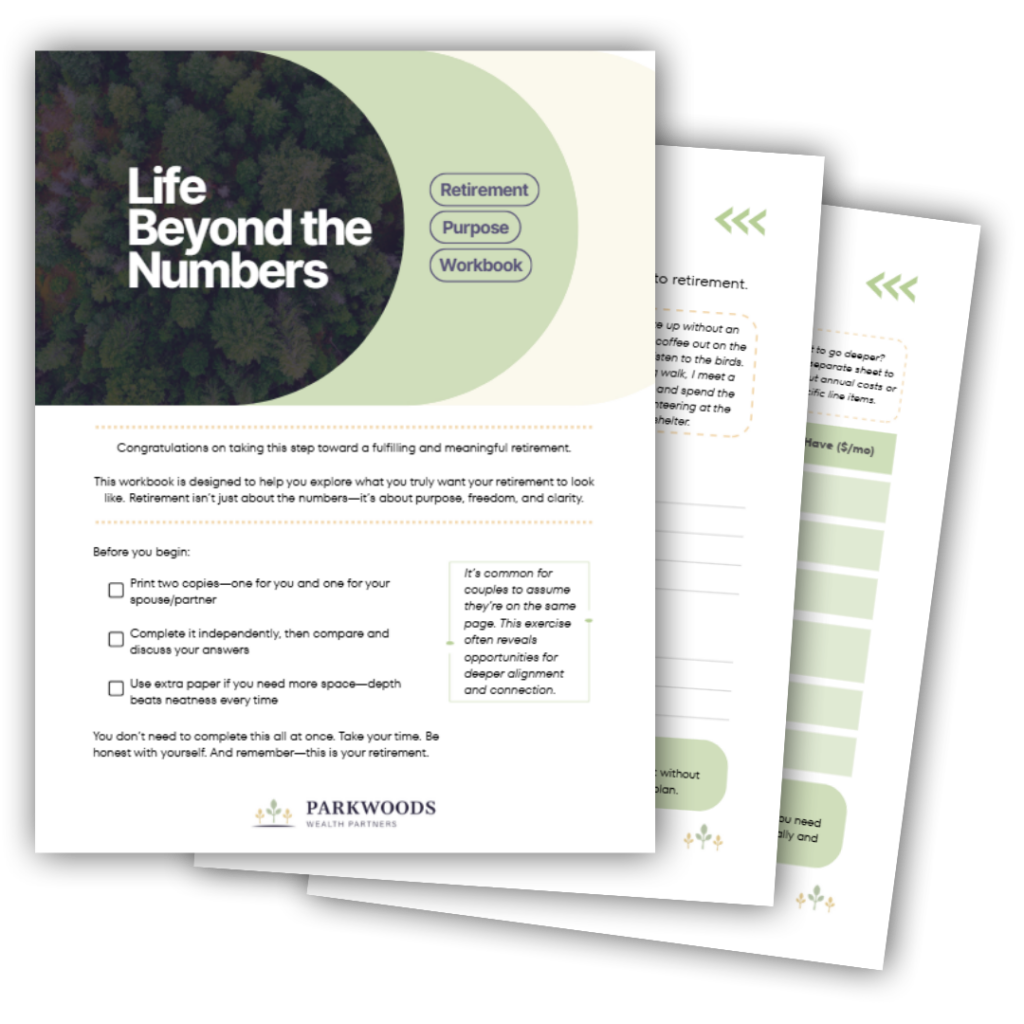
Our guide If Something Happened Tomorrow is a simple starting point – a short self-check for couples who want to identify what’s settled, what’s assumed, and where a little organization could go a long way. It doesn’t require much time, and no preparation is needed.
For couples who find larger gaps, or who want to make sure their overall plan reflects both spouses clearly, a short conversation with a Parkwoods advisor is a natural next step.